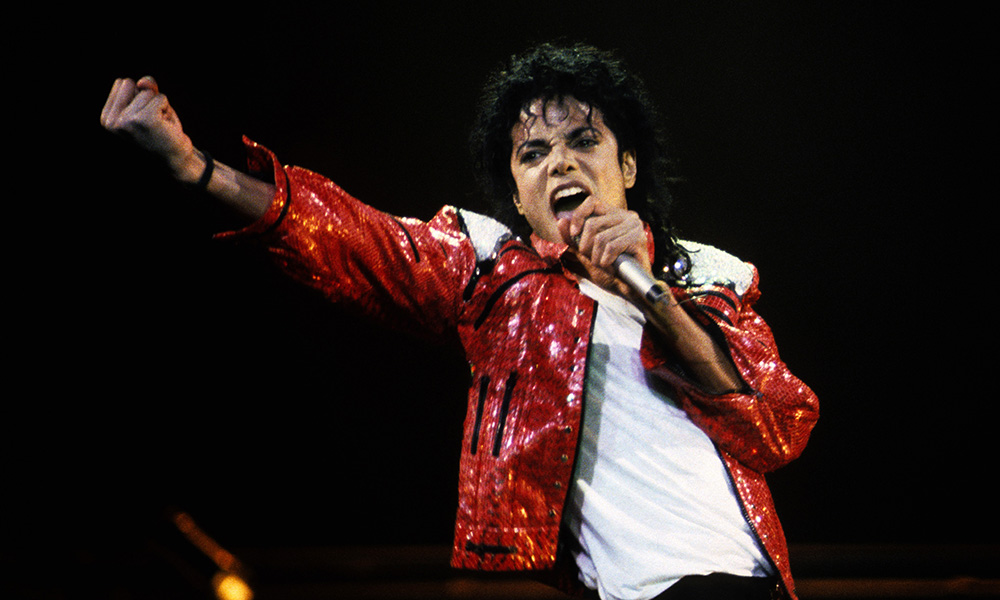
The Anatomy of Artistic Transcendence
There are great singers, great dancers, great performers, fashion icons and filmmakers. Then there was Michael Jackson.
What made Michael Jackson extraordinary was not simply that he excelled in one discipline. It was that every aspect of his artistic expression operated at an almost impossibly high level simultaneously. His voice, his dance, his visual identity, his performances, his music videos, his costumes, his symbolism and his attention to detail could each have stood alone as the defining achievement of an artist’s career. In Michael Jackson, they existed together.
Most people analyze Michael Jackson from the wrong starting point. They focus on the obvious elements: the songs, the moonwalk, the glove, the fame. But the real story is deeper. It is in the details—the idiosyncrasies, the signatures, the obsessive craftsmanship and the countless artistic decisions layered on top of one another until a performer ceased merely being a performer and became something else entirely: a work of art.
The Voice: An Instrument Beyond Singing
The first layer of Michael Jackson’s genius was his voice. Before discussing anything else, it is important to acknowledge the foundation itself: Michael Jackson possessed one of the most remarkable voices in modern music history. It was powerful and beautiful, technically precise and capable of extraordinary emotional range. He could move from softness to enormous power and soar into extraordinary heights while maintaining clarity, control and feeling.
There are many professional singers with beautiful voices. There are many with technical skill and extraordinary range. But what separated Michael Jackson from nearly everyone else was what he built on top of that foundation. He developed an entirely unique vocal vocabulary: the “hee-hee,” the gasps, the cries, the screams, the breath attacks, the rhythmic exclamations, the sharp vocal accents and all of those peculiar sounds that seemed to live somewhere between the notes.
These were not random embellishments. They became a language, a signature, almost a fingerprint. You could hear a single sound—sometimes not even a lyric—and immediately know that it was Michael Jackson. That level of recognizability is extraordinarily rare.
More importantly, however, those signatures were not merely distinctive; they were beautiful. Many artists develop quirks, mannerisms and stylistic habits that make them recognizable. Few transform those habits into something so elevated that the signature itself becomes part of the emotional pleasure of hearing them. When Michael Jackson punctuated a vocal phrase with one of his characteristic sounds, it did not feel like an interruption of the music. It was music.
His idiosyncrasies were not separate from the art. They were the art. They took an already extraordinary natural instrument and added another layer of artistry on top of it, transforming a remarkable voice into something unmistakably Michael Jackson.
The Dance: Precision Beyond Movement
The second layer was dance, and again the foundation matters. Michael Jackson was an exceptional dancer, but even that description feels inadequate because what made him extraordinary was not simply his ability to move. It was the extraordinary precision with which he controlled movement.
Every finger, every shoulder, every glance, every head turn, every pause and every shift of weight carried intention. There are dancers capable of astonishing athletic feats, extraordinary speed and immense technical complexity. Michael Jackson possessed something rarer: control. Absolute control.
His movements appeared impossibly deliberate, as though every muscle in his body was operating in service of a larger artistic vision. Even stillness became choreography. A pause could generate tension. Standing motionless could command an audience of tens of thousands. He understood that dance was not simply the act of moving the body; sometimes the most powerful movement was the movement you made the audience wait for.
This is why comparisons with other extraordinary dancers often fail. Someone may be able to move their body through more complicated sequences, perform more acrobatically or dance with enormous physical ability, but Michael Jackson’s precision existed at another level. There was a technical control over virtually every ounce of his body. He could probably have performed much of what other great dancers do, but what distinguished him was the specificity with which he chose what not to do. Movement was edited. Refined. Controlled.
Many performers can execute movement. Very few can make every movement meaningful.
Michael Jackson’s dance was therefore not simply dance. It was visual storytelling. It was rhythm made visible and precision transformed into emotion. Just as his voice possessed signatures that immediately identified him, his movement possessed a vocabulary that could not be mistaken for anyone else’s. A silhouette was enough. A posture, a turn, a gesture—and the identity was unmistakable.
The Garb: The Art of Looking Like Michael Jackson

The third layer was the garb: the construction of Michael Jackson as a visual object. He did not merely wear clothes. He constructed an aesthetic and, ultimately, a mythology.
There was something fundamentally cool about Michael Jackson’s appearance: some combination of rock-and-roll cool, pop glamour, theatricality, masculinity, delicacy and sheer audacity. The military jackets, the gloves, the buckles, the loafers, the white socks, the sunglasses, the curls and the unmistakable silhouette all contributed to a larger visual language. Even his hair became part of the art—the curls framing this almost impossibly pretty, delicate face while the clothing and movement around it could be aggressive, hard and commanding.
He understood something many performers never fully grasp: appearance is not decoration. Appearance is communication.
Even the smallest details mattered. Consider the white tape or bandages wrapped around his fingertips. At first glance, they appear insignificant. Yet they reveal the mind of an artist obsessed with detail. Visually, they draw the eye toward his hands, accentuating every gesture, snap, point and movement.
But there is another way of reading them symbolically. They evoke the craftsman—the painter, the sculptor, the artisan whose work is so meticulous that the process of making it leaves marks upon the body. Cuts, scabs, bandages: evidence of creation itself. And Michael Jackson, dancing and rehearsing with that degree of physical intensity, may very literally have accumulated the bruises and injuries of his craft. Whether or not that symbolism was consciously intended, it became inseparable from the image.
That is the artiste. The person for whom even the fingertips become part of the composition.
Nothing felt accidental. Everything felt considered and crafted. And above all, everything felt cool—not fashionable, not trendy, but cool in the deeper sense: an aesthetic so rooted in a singular identity that it transcends the era that produced it.
Performance: The Transformation of Presence
The fourth layer was performance, and this is where Michael Jackson moved beyond entertainment. Many artists perform songs. Michael Jackson performed experiences.
A concert was never merely a concert. His voice had the power to travel through enormous stadiums and across waves of crowds, but the voice was only one component. His movement commanded attention, his visual presentation reinforced the mythology, his timing manipulated anticipation and every element worked together. Nothing existed in isolation.
The audience was not simply hearing music. They were witnessing a fully realized artistic world.
This is why a Michael Jackson performance could feel larger than the individual songs being performed. It could be cinematic, theatrical, mythological, at times almost spiritual. He understood how to create anticipation before moving, how to allow the audience’s reaction to become part of the performance and how to manipulate silence, sound, movement and spectacle together.
The performance was never simply about execution. It was about transcendence.
Music Videos: Cinema in Musical Form
The fifth layer was perhaps his most revolutionary contribution: the music video. What many artists treated as promotional material, Michael Jackson transformed into cinematic art.
These were not simply videos attached to songs. They were films. The sound design, editing, pacing, cinematography, narrative structure, visual effects, choreography and production design were all treated as components of a complete work. He was making music videos in the twentieth century that still feel cinematic because he was approaching them with the sensibility of a filmmaker rather than simply recording a singer performing a song.
This is why so many music videos from every era feel disposable while Michael Jackson’s work remains watchable as art. The attention to detail exists at every level: the cut, the sound, the movement, the costume, the framing, the transition, the atmosphere. Everything is doing something.
And this is perhaps the larger point. Every medium through which Michael Jackson presented himself became art. Whether the medium was an album, a stage, a music video, a costume or simply the movement of his body, he approached presentation as an act of creation. He did not approach himself merely as a celebrity or even as an entertainer. He approached himself as an artist.
Every medium became an opportunity for craftsmanship. Every medium became an opportunity for worldbuilding. Every medium became art.
Empowerment and Storytelling: Art in Service of Something Larger
The sixth layer was empowerment and storytelling. Michael Jackson’s music was not simply designed to entertain. Again and again, he used it to articulate what human beings could be: kinder, more compassionate, more unified and more conscious of one another. Social justice, racial unity, environmentalism, charity, children, peace and the fundamental idea that we are one ran throughout his work.
That contributed enormously to the emotional experience of Michael Jackson. It is part of why his performances could produce tears. You were not simply watching extraordinary choreography or listening to an extraordinary voice; you were being invited into an emotional worldview. Even when he addressed racism, war, poverty or environmental destruction, the underlying proposition was that humanity could become better.
In that sense, Michael constructed something almost prophet-like around his artistry—not prophet in the religious sense, but in the architecture of his cultural role. Through his music, humanitarian causes and universal positioning, he presented the artist as someone capable not merely of reflecting the world, but of articulating a vision for what it could become.
Central to that architecture was childhood. Whatever one believes about the controversies surrounding his life, childhood functioned artistically as a symbol of innocence, imagination and humanity before its corruption by the adult world. And his ability to reach children created something extraordinary: a continuous generational loop. Somewhere today, a five-year-old born decades after Michael Jackson’s greatest era is still attempting the moonwalk, imitating the “hee-hee” or dancing to his music.
Michael Jackson could capture people at their most innocent, before they understood fame, cultural significance or artistic technique. They simply felt the music, the movement, the joy and the wonder. And once an artist enters your life at that stage, the relationship becomes intertwined with memory itself.
The empowerment, humanitarianism and innocence were therefore not peripheral to his greatness. They gave meaning to the spectacle. They transformed technical excellence into emotional experience. Michael Jackson did not merely ask audiences to watch him. At his most powerful, he asked them to believe in something.
The Power Behind Michael Jackson
The true power of Michael Jackson was therefore not any individual skill. It was synthesis.
His voice was art. His dance was art. His appearance was art. His performances were art. His films were art. Even the construction of Michael Jackson as a public visual identity was art. Everything connected, and everything reinforced everything else. Every medium carried the same obsessive commitment to detail, the same craftsmanship, the same pursuit of perfection and the same artistic vision.
That is why Michael Jackson transcended celebrity. He became an archetype, a symbol, a cultural force and a singular artistic phenomenon.
The greatness was not simply that he could sing better than most people or dance better than most people. It was that he understood artistry as a total system. There was no part of the presentation too small to be considered. The fingertip mattered. The breath between two words mattered. The angle of the head mattered. The second of silence before the movement mattered. The jacket mattered. The edit mattered. The sound effect mattered.
The details accumulated until the details became Michael Jackson.
Why We Will Never Get Another Michael Jackson
The uncomfortable truth is that we may never see another Michael Jackson because the conditions that created him no longer exist.
Modern culture rewards visibility. Michael Jackson emerged from a culture that rewarded craftsmanship. Today, artists are expected to produce constant content, constant updates, constant access and constant exposure. The audience increasingly consumes the person rather than the work, the process rather than the masterpiece, the celebrity rather than the art.
Michael Jackson belonged to a different tradition: one of obsessive construction, where artists could disappear for months or years to perfect every detail before presenting something to the world; where mystery amplified impact; where the work itself remained the center of attention.
Today we live in the age of observation. The audience watches celebrities live. Michael Jackson came from the age of creation. The audience witnessed finished art.
That distinction matters because greatness is not merely talent. Greatness is structure, discipline, obsession and the willingness to refine a detail a thousand times until it becomes exactly what the artist envisioned.
Michael Jackson understood that.
Until another artist understands that level of artistic totality—that every sound, movement, costume, frame, gesture and performance must function together as part of a larger artistic architecture—we will continue producing celebrities.
But we will not produce another Michael Jackson.
Not because raw talent no longer exists, but because the conditions that allow that talent to be forged into craftsmanship no longer dominate the culture.



Leave a Reply